Arranging things has two aspects: (1) the selection of objects-things-and (2) the manner in which the objects are arranged.
In the commercial realm, arranging things is omnipresent and goes by many names. The arrangement of flowers is called floral design. The arrangement of objects for photo shootings is called styling. The arrangement of objects in homes and offices is called interior decorating. The arrangement of objects in store windows and in-store displays is called visual merchandising.
Leonard Koren, Arranging Things: A Rhetoric of Object Placement, 2003, Stone Bridge Press, Berkeley, California
As a graphic designer, I arrange images of objects around me. I collect and reorganize these photos, trying to create new relationships between them. My goal in this process is to achieve an “A + B = C” effect, where combining two existing elements results in something entirely new.
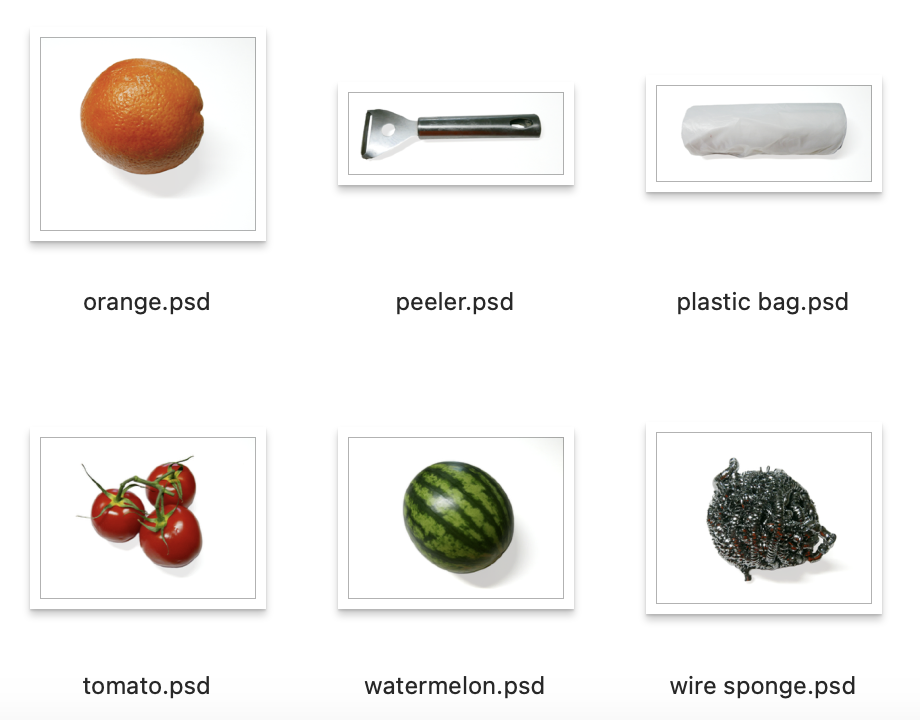
For me, the image of an object is like a word, and I use images to compose sentences.
- Images of objects first have an appearance: including shape, color, and texture
- Then they have a meaning: that is, the meaning of the word. For example, even if a watermelon is cubic or doesn’t have green stripes, as long as it’s still a watermelon, it retains the cultural attributes of ‘watermelon’ as a fruit
- After that, objects begin to dialogue with each other: toilet brush + potato = A, hammer + potato = B
- Subsequently, the angle and form of presentation of the objects establish a relationship with the viewer, either placing the viewer within the image or clearly distancing them from it.
In other words:
- The form of the image
- The meaning of the object
- The dialogue between object and object
- Image and audience
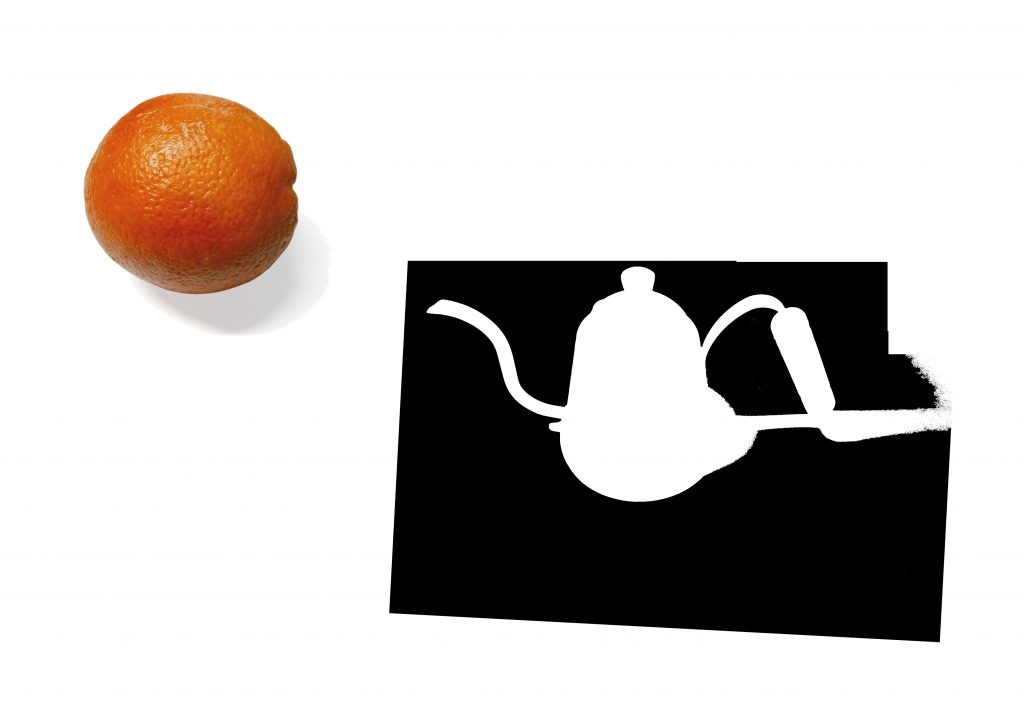

the form of the image
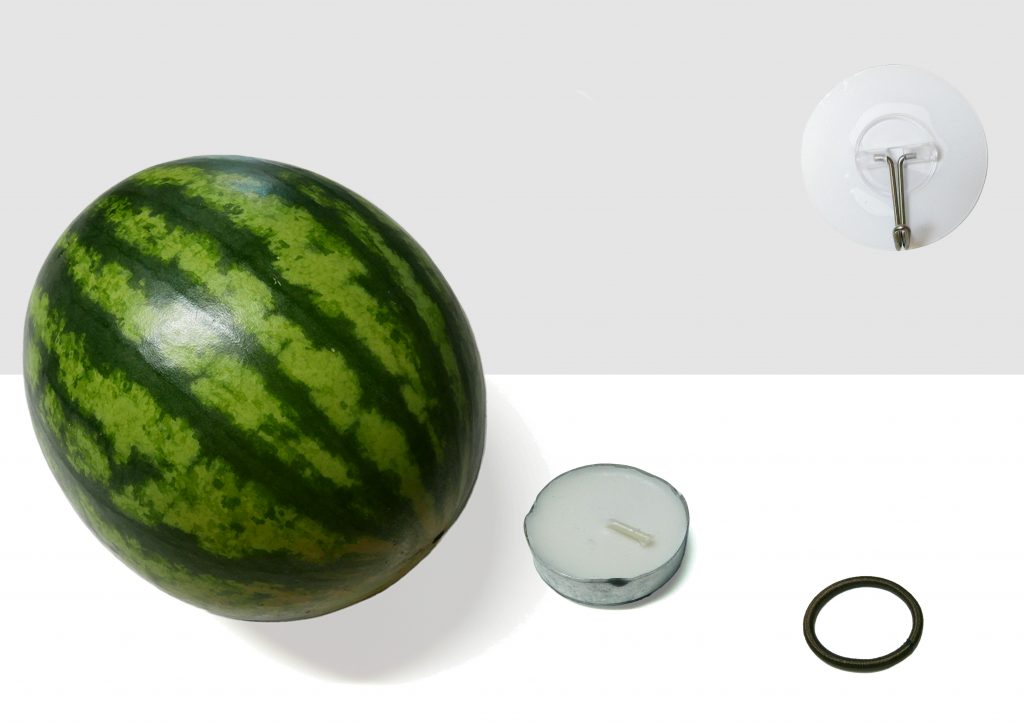

the dialogue between object and object
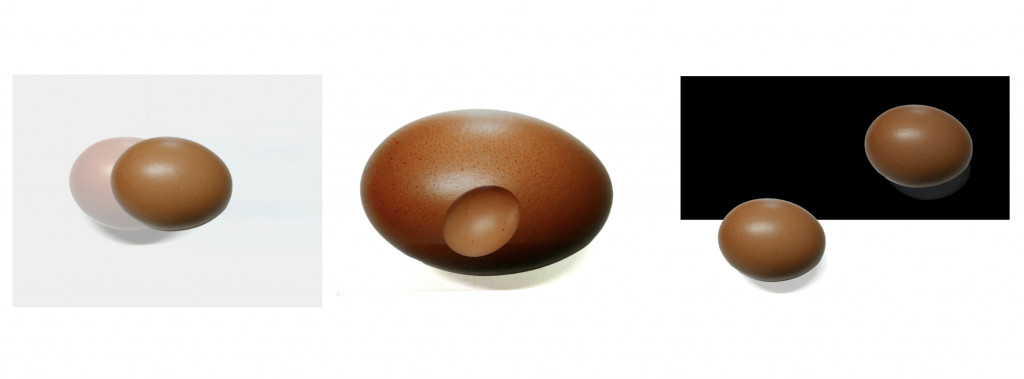
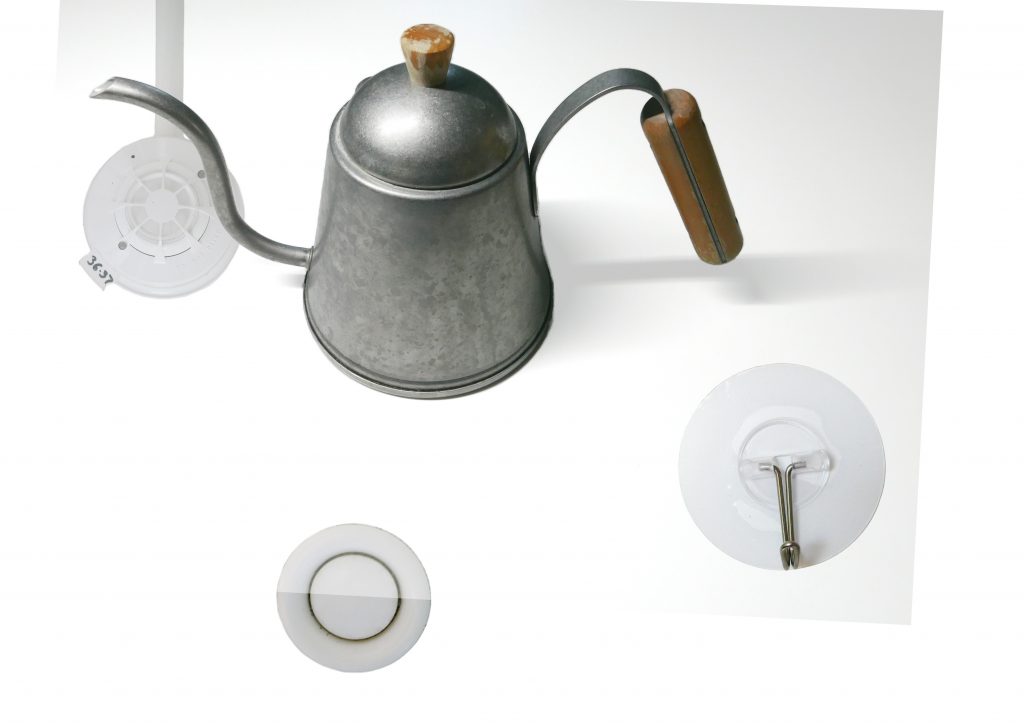
space created by objects
Reflection: The difference between language and images
Language:
- Possesses the aesthetic form of phonetics
- Can be more abstract, with abstraction established through word-to-word relationships, for example: ‘rose is rose is rose’ (Gertrude Stein) and ‘he danced his did (E. E. CUMMINGS)’
- Can express non-physical concepts, for example, 1000 apples, or ‘falling flower is cruel’ (落花无情)
- Language has logical relationships, can emphasize certain characteristics of words, for example: a very large watermelon
Images:
- Possess aesthetic form through color and shape
- More direct and impactful, images can immediately evoke resonance
- Have multiple ways to express the same object, can emphasize certain characteristics of an object through this method: for example, a very large watermelon
- Images can establish a positional relationship between the viewer and the image through perspective, for example: a floor plan
- Images can create a sense of distance between the viewer and the image through the degree of abstraction in representation: for example, an oval and a photograph of an egg