one key reference:
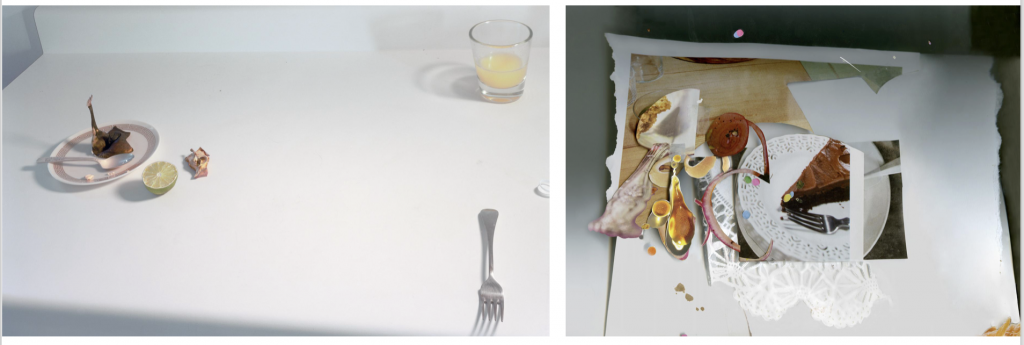
The two works on the left and right are early and mid-career pieces by Laura Letinsky, respectively. She contemplates how to approach photography when it becomes something everyone can do. The focus of her work is not on the content of the photographs, but rather on how to arrange the objects within the frame.
Laura’s reference: Giorgio Morandi’s still life paintings.
Emphasize the composition and arrangement of objects rather than their inherent meaning
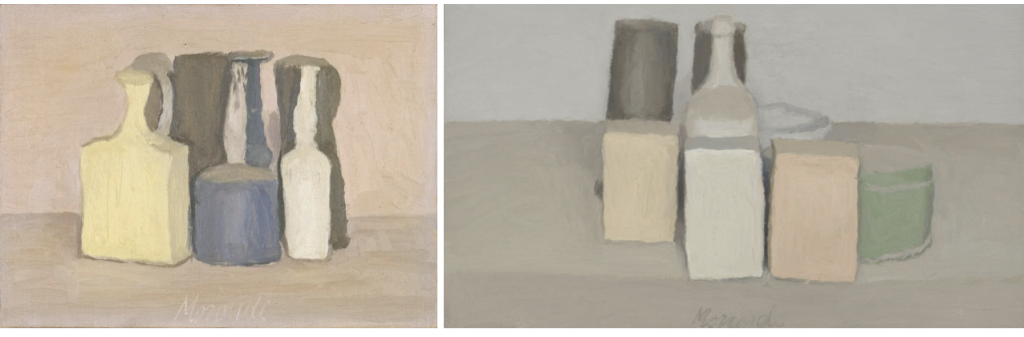
Giorgio Morandi
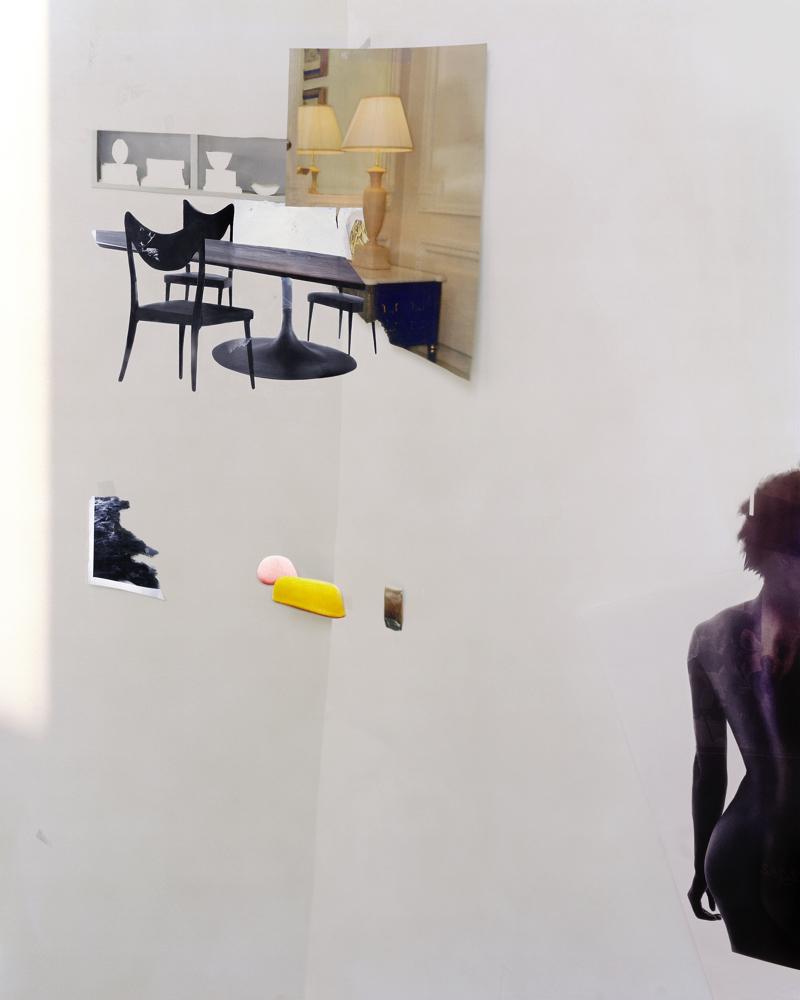
Laura Letinsky
Using this work as an example, space is established through imagery. A folded line suggests a corner, though the image doesn’t strictly adhere to this corner. The angle formed by the folded line aligns with the viewer’s perspective, placing the viewer at the forefront of the imagined space.
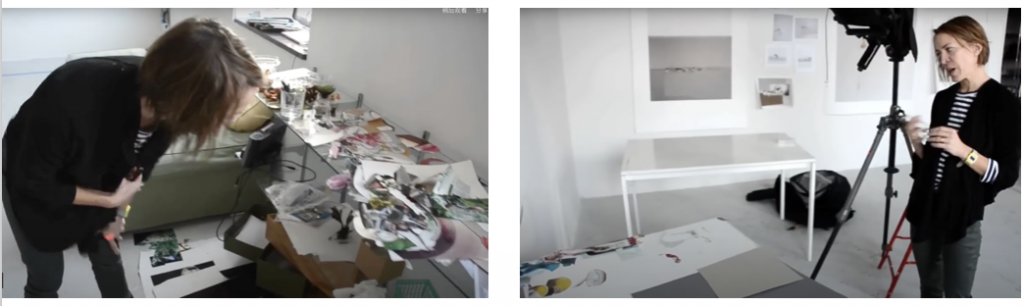
Laura sources her objects from items found around her home or studio, as well as images from magazines. She then adjusts the spatial relationships between these existing objects and the camera’s perspective. I use this process as a reference to establish my own working method:
- Select objects (words)
- Develop relationships and content between words
- Represent each object using a specific form
- Arrange the positional relationships between elements (different forms of objects)
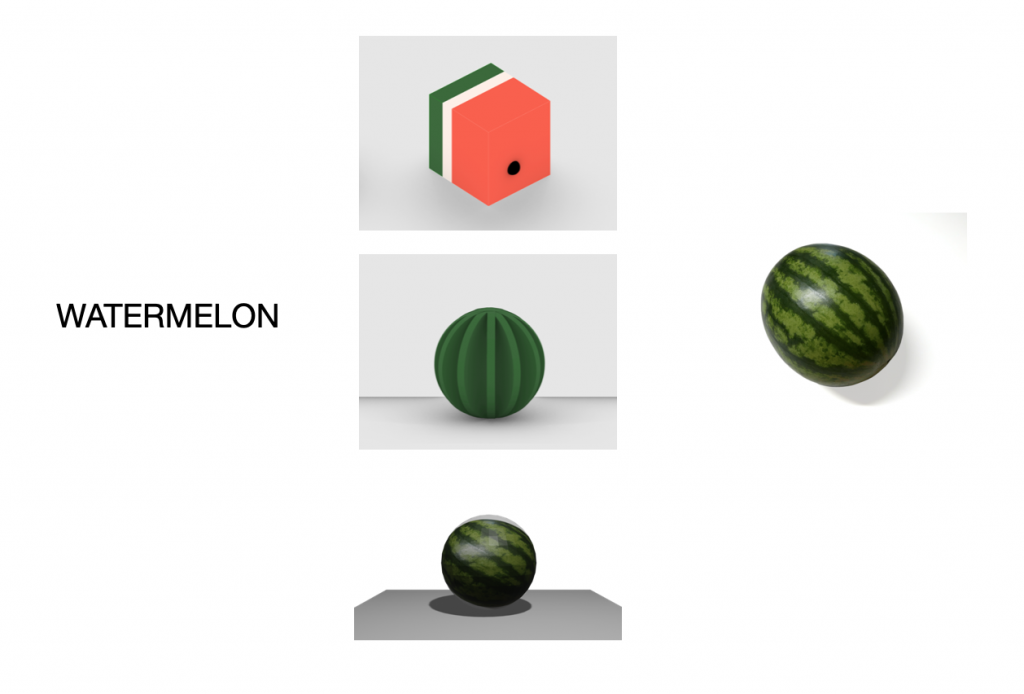
Different representation methods for watermelon: ranging from abstract to realistic, and from linguistic to physical object.
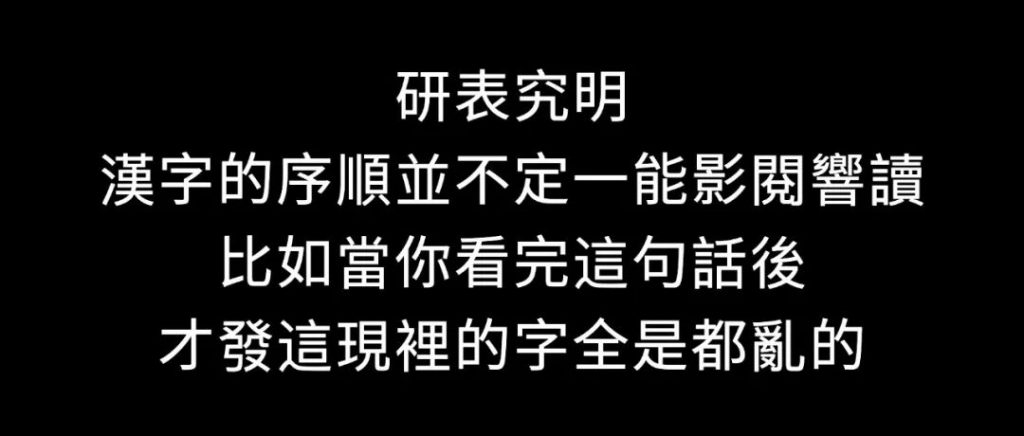
This image exemplifies how people can read Chinese characters without following a specific order.
I aim to create an example illustrating that people can interpret images without adhering to a specific form; they can perceive “watermelon” through various expressive methods. Language derives its charm from logic; “rose is rose” is a juxtaposition of two roses. Images, however, draw their charm from their form of expression.