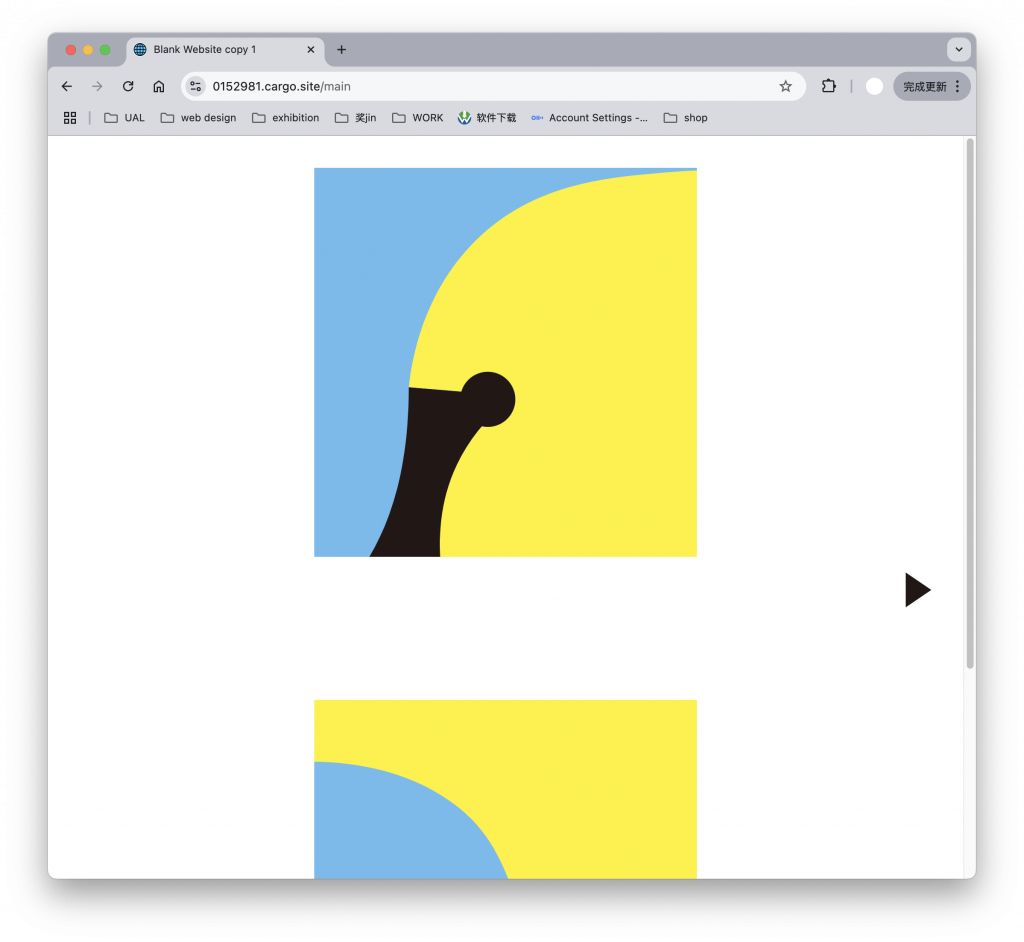
Background and Subject
1
I used Riso printing because it constructs images using halftone dots, allowing the layering hierarchy of the working file to be visible in the final result.
There are two ways to represent the subject (goose) within this system:
1. Placing the goose’s shape as black halftone dots over the background color, mimicking the conventional perception of a subject positioned in front of a background.
2. Leaving a white negative space to define the goose’s shape, flattening the distinction between subject and background. In this case, there is no spatial depth—only a differentiation between blue, green, and white as categories of color.
This categorization of content operates on two levels:
1. Color (blue, green, white).
2. Subject and background (foreground-background relationship vs. a flat composition).
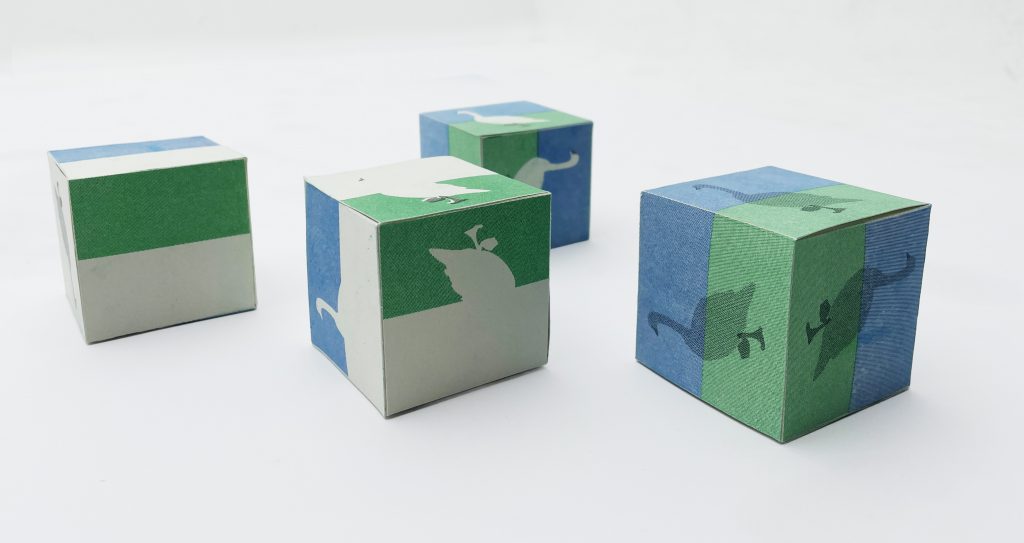
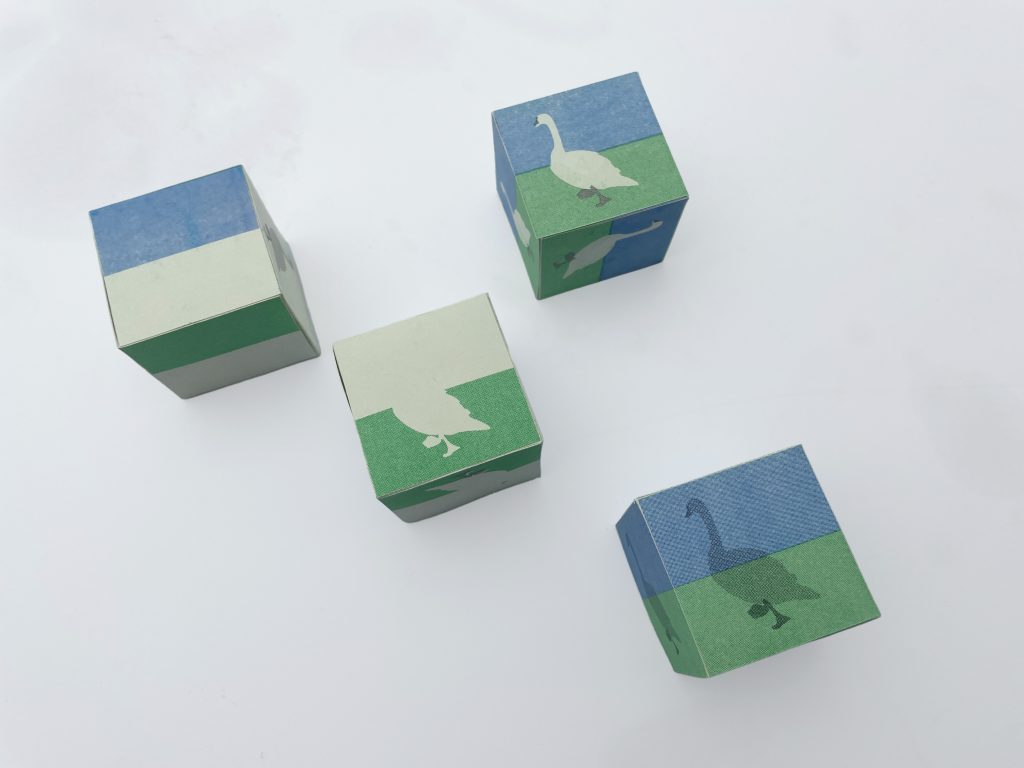
2
Placing the background and subject on the same level, treating them as equal elements in constructing a motion trajectory.
Material and Shape
Material comes after shape—this phrase carries a double meaning. In animation, materials are applied after defining shapes, following a structured order of content construction. This hierarchy—material following shape—also serves as a metaphor for the sequencing of building content.
Motion trajectory and Shape
If motion trajectory and shape are separated, can the object still be recognized by observing only its motion trajectory?
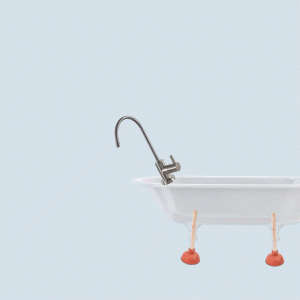
Position
Evenly dividing a single image into multiple parts—using a website’s up and down buttons to reconnect these sections.